Skip to content

Australian Summer School Holidays: A 6-Week Quran and Arabic Learning Plan for Muslim Kids
Six Weeks of Quran & Arabic This Australian Summer

For Muslim families in Australia

Australian Summer School Holidays: A 6-Week Quran and Arabic Learning Plan for Muslim Kids

A six-week summer plan can build a sustainable habit rather than turn the school holidays into another school term.

Ustadha Shaimaa Wagdy, teacher at Muslim Teachings AcademyBy Ustadha Shaimaa Wagdy

Quick answer

A six-week Quran and Arabic plan for Australian summer holidays works best when it leaves room for rest, family trips and play. Set one manageable goal per week, review familiar surahs and adjust the schedule when plans change.

Why this matters for Muslim families in Australia

A six-week summer plan can build a sustainable habit rather than turn the school holidays into another school term. Every child’s needs and family circumstances are different. The six-week plan below is a flexible guide that families can adapt to their child’s needs.

Six Weeks of Quran & Arabic This Australian Summer
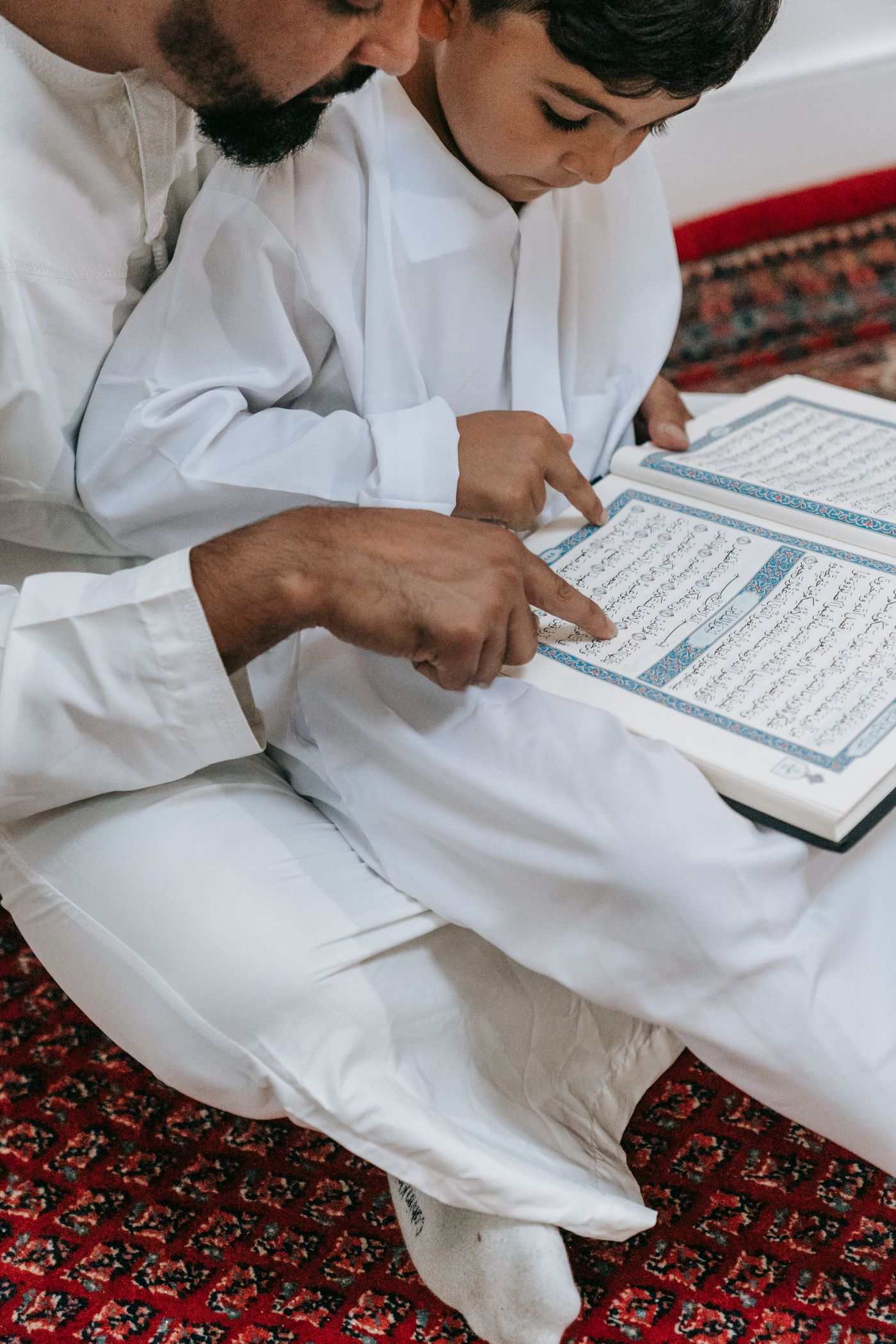
Image: Pexels, downloaded for this article
Ustadha Shaimaa Wagdy

FROM OUR TEACHERS

The six-week holiday plan that needed room to breathe

Ustadha Shaimaa Wagdy

A parent wanted her child’s summer Quran plan mapped out down to the day. At first the list looked impressive: new surahs, Arabic writing, daily revision and extra reading. Then she mentioned a family trip and the child’s swimming lessons. I asked which parts of the plan could survive an ordinary summer week.

We separated essential practice from optional activities. The child chose a short, familiar revision task that could fit into a travel day, while the longer reading sessions stayed on quieter days. I suggested reviewing existing memorisation before increasing the amount of new work. We also agreed that missing a day should lead to a sensible reset, not a punishment.

The aim of a holiday plan is not to squeeze school into every free hour. I would rather a child return to lessons with a habit they can keep than a checklist they have learned to dread.

What a realistic six-week plan looks like

Start with an assessment

Know what your child can already recite and read.

Protect the holiday

Keep space for swimming, family time and rest.

Build a lasting habit

A small regular practice is more useful than an unsustainable sprint.

A practical checklist for parents

  1. Week 1: assess existing surahs, letters and a personal goal.
  2. Week 2: connect letters and vowel marks to words.
  3. Week 3: add age-appropriate meaning to a short surah.
  4. Week 4: vary activities and keep practice playful.
  5. Week 5: revisit gaps and celebrate one independent skill.
  6. Week 6: consolidate and make a lighter school-term plan.

Instead of / Try

Instead of Try
Filling all six weeks before looking at the family calendar Mark trips, clubs and rest days first, then choose manageable revision times.
Adding new memorisation every day Alternate small new goals with repetition of familiar surahs.
Treating a missed session as a failed holiday plan Restart with a short review at the next suitable opportunity.

A simple summer learning activity

Draw six boxes on a page, one for each week of the holidays. Mark travel, family visits and other commitments first. For each week, choose one small Quran or Arabic goal and two brief review opportunities that can realistically fit. At the end of each week, ask your child which activity helped and adjust the following week together.

Ustadha Shaimaa Wagdy, teacher at Muslim Teachings Academy

Written by

Ustadha Shaimaa Wagdy
Teacher at Muslim Teachings Academy

Also read: Helping Your Australian-Born Child Learn Arabic

Thoughtful learning for your child

Explore Quran, Arabic and Islamic studies with our teaching team.

Book a Free Trial

Photo: Pexels. Teacher portrait, where shown: Muslim Teachings Academy.

← Back to the blog

Quran Classes in Australia: Weekend Mosque School or One-to-One Online Lessons?

Weekend Mosque School or Online Quran Lessons?

For Muslim families in Australia

Quran Classes in Australia: Weekend Mosque School or One-to-One Online Lessons?

A family in an Australian suburb may need to change Quran lessons because a long journey and changing work shifts make regular attendance impossible.

Ustadh Mahmoud TantawyBy Ustadh Mahmoud Tantawy

Quick answer

To choose between weekend mosque school and online Quran classes in Australia, compare teaching quality, attendance, travel time and your child’s need for community. If long journeys cause missed lessons, find a more reliable timetable without losing opportunities for group learning.

Why this matters for Muslim families in Australia

A weekend mosque class can offer friendships, shared learning and a sense of community. Yet a long drive across an Australian city and changing work shifts can make attendance unpredictable even when a child enjoys the lessons. The useful comparison is not simply mosque versus screen: it is what the child needs, what the family can sustain and how the teaching is actually delivered.

Weekend Mosque School or Online Quran Lessons?
Image: Pexels, downloaded for this article
Ustadh Mahmoud Tantawy

FROM OUR TEACHERS

The missed lessons were not a lack of interest

Ustadh Mahmoud Tantawy

One family told me their son liked his weekend mosque class but was missing lessons. The drive across town took longer than expected, and a parent’s changing shifts meant they could not always get there. The family worried that moving online would mean giving up something valuable.

I asked what the boy enjoyed about the group and what he had actually been practising. We talked about keeping community contact through the mosque when possible, while looking for a dependable time for individual reading correction. Before recommending a change, I wanted to hear him read and understand whether he needed help with fluency, revision or tajweed.

Consistency matters, but so does belonging. I would not judge a family’s commitment by how reliably they can manage a difficult journey. The useful question is how the child can keep learning well.

What the family’s timetable taught us

Consistency matters

Reliable attendance is easier when the journey, family shifts and lesson time actually fit together.

The journey matters

A long, unpredictable drive may interrupt even a good learning programme.

Choose by fit

Consider teacher quality, comfort, timetable and what the child actually needs.

A practical checklist for parents

  1. Review the previous weeks’ attendance and the true travel time alongside your child.
  2. Request a reading assessment using unfamiliar words, not only memorised passages.
  3. Discuss the attendance difficulty respectfully with the mosque teacher before changing arrangements.
  4. Consider replacing an unreliable timetable with a realistic weekly one-to-one lesson, if the family prefers.
  5. Review whether the overall timetable remains manageable.

Instead of / Try

Instead of Try
Assuming missed mosque lessons mean the child lacks interest Check the journey, work shifts and what the child enjoys about the class.
Choosing online lessons only to avoid the drive Compare individual correction with group learning and community contact.
Changing programmes without checking existing options Ask about make-up lessons or a practical combination before switching.

A simple family planning activity

Look back over the past two weeks with your child. Write down the real journey time, missed sessions and reasons for them, alongside work and school commitments. Discuss what your child values about the mosque group. Then compare one dependable online slot with one feasible group activity before speaking to the current teacher.

Ustadh Mahmoud Tantawy

Written by

Ustadh Mahmoud Tantawy
Teacher at Muslim Teachings Academy

Also read: A 6-Week Quran and Arabic Learning Plan for Australian Summer

Thoughtful learning for your child

Explore Quran, Arabic and Islamic studies with our teaching team.

Book a Free Trial

Photo: Pexels. Teacher portrait, where shown: Muslim Teachings Academy.

← Back to the blog

How to Fit Quran Lessons Around UK School, Homework and After-School Clubs

Study materials representing a British child's school and Quran learning schedule

For Muslim families in Britain

How to Fit Quran Lessons Around UK School, Homework and After-School Clubs

A practical way to make Quran homework manageable alongside UK school, homework and clubs—starting with one clear priority instead of four scattered tasks.

Ustadh Islam AwnyBy Ustadh Islam Awny

Quick answer

To fit Quran lessons around UK schoolwork and clubs, give your child one clear revision priority at a time. Check that they can explain the homework before the lesson ends, then choose a short practice window the family can manage. Confusing assignments often need simplifying before the timetable needs changing.

When Quran homework has too many moving parts

British pupils may have homework, reading and sports clubs alongside Quran lessons, but the way homework is assigned also matters. A child who attends regularly but rarely completes Quran homework may be facing too many competing tasks, not a lack of interest.

This teaching experience shows how a teacher can simplify the assignment itself without changing lesson times.

Study materials for schoolwork and home learning
Photo: Pexels
Ustadh Islam Awny

FROM OUR TEACHERS

The homework sheet was the problem

Ustadh Islam Awny

One boy always joined his Quran lesson ready to read, yet returned the following week with only part of his homework completed. His parents were already fitting schoolwork and an after-school club into busy evenings. When I looked again at what I had assigned, I could see four different instructions with no clear priority.

Instead of adding reminders, I rewrote the task around one small target: repeat a short passage, listen for a particular pronunciation point and show me that line at the next lesson. I asked him to tell me in his own words what he needed to practise. If he could not explain it, I had not made it clear enough.

That experience challenged my first instinct. Sometimes the teacher needs to simplify the work before asking the child to work harder.

Three lessons from this story

Clarity comes before quantity

One specific revision task may be easier to complete than four assignments with unclear priorities.

Check the instructions

Ask children to explain what they have to practise before leaving the lesson.

Revision is real progress

Improving a familiar passage can be just as valuable as learning something new.

A one-priority Quran homework plan for busy UK school weeks

The timetable still matters, but the first question in this scenario is whether the assignment itself is realistic. Here is an example format that does not require changing class times.

Core task: read the same two lines aloud slowly, checking one previously corrected sound.

How to check completion: the child can read the selected lines and identify the spot being practised.

Optional extra: listen once to an accurate recitation and spot the corresponding word.

Parent’s role: make a brief, quiet opportunity available without repeatedly demanding progress.

Teacher’s next step: review that exact reading point and adjust the task if it is still too difficult.

Instead of / Try

Instead of: “Revise the surah, memorise more, practise tajweed and complete your activity.”

Try: “Before our next lesson, practise this small section and one specific sound.”

Instead of: “You haven’t done everything again.”

Try: “Tell me which task you understood, and let’s make the next one clearer.”

Three low-pressure ways to reinforce Quran learning

  • Two-line review: focus on a short familiar passage without rushing.
  • Listen and notice: hear a brief accurate recitation and recognise the target sound.
  • Teach-back: let the child explain exactly what the homework is, in their own words.

These small activities support structured teaching; they should not turn the family home into another classroom.

Ustadh Islam Awny

Written by

Ustadh Islam AwnyQuran teacher, Muslim Teachings Academy

Also read: My Child Is the Only Muslim in Class: How Can I Help Them Feel Confident?

Build a Quran homework plan your child understands

Talk to our teaching team about a practical starting point.

Book a Free Trial

Image credit: Pexels. Teacher portrait: Muslim Teachings Academy.

← Back to the blog

Weekend Islamic School vs. Online Quran Classes: Which Is Better for Your Child?

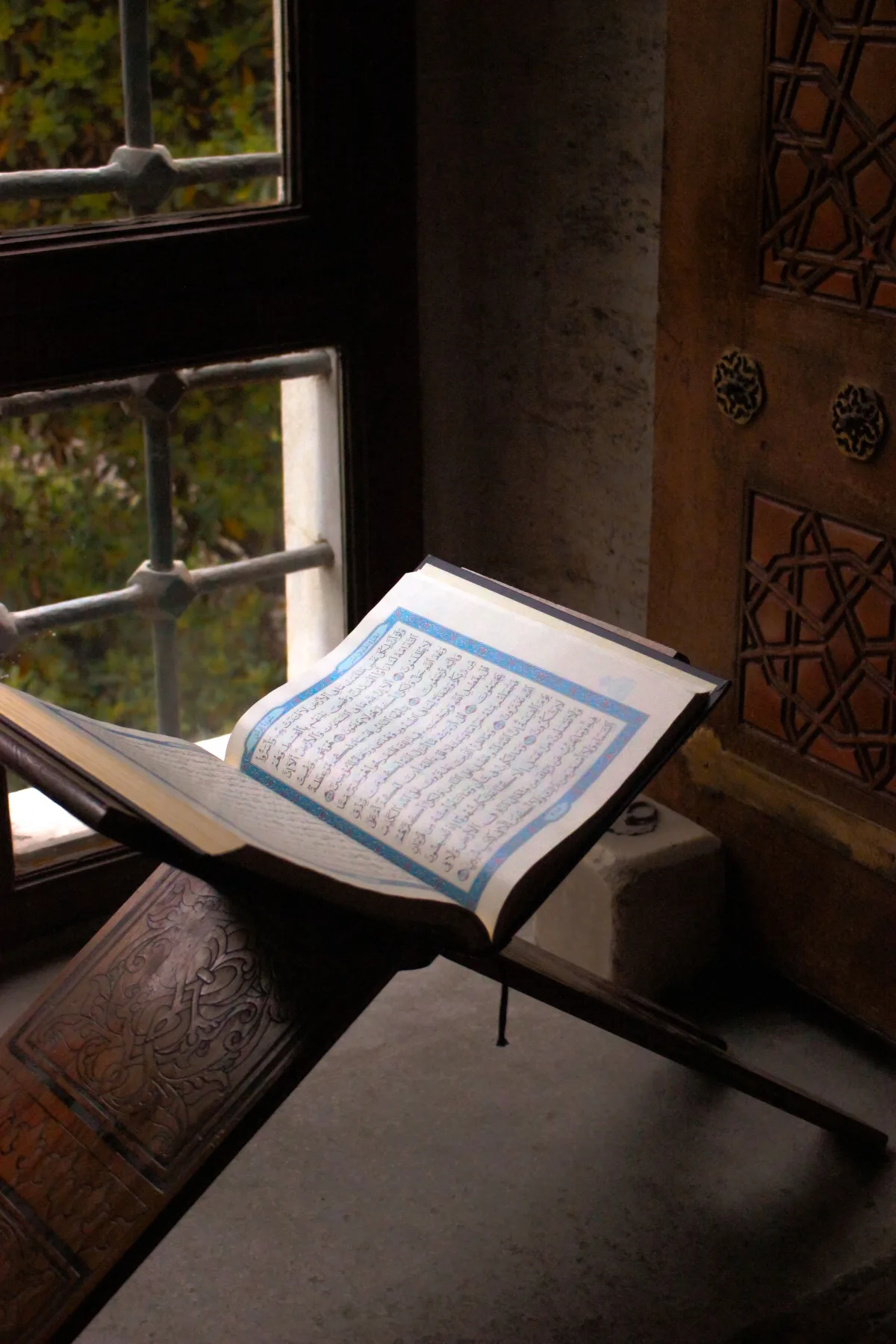
An open Quran on a stand in a mosque, illustrating weekend Islamic school and online Quran learning

For Muslim families in America

Weekend Islamic School vs. Online Quran Classes: Which Is Better for Your Child?

Is your teenager losing interest because the group’s Quran programme no longer matches their level? This teaching experience explores how to assess the fit before switching.

Ustadh Omar Saeed, Quran teacher at Muslim Teachings AcademyBy Ustadh Omar Saeed

Quick answer

To decide between weekend Islamic school and online Quran classes, first assess whether the teaching matches your child’s reading and tajweed level. Ask about a more suitable group and individual feedback before switching. The best choice is one your child can attend consistently and continue learning from.

Weekend Islamic school or online Quran classes: why the question matters

Weekend Islamic school can offer valuable community learning. But what if a student already reads comfortably and the group continues practising skills she has long mastered?

The right choice depends on the student’s assessed level, the school’s ability to differentiate instruction, and access to suitable individual feedback.

Boys learning Quran together in a group
Ustadh Omar Saeed

FROM OUR TEACHERS

She had stopped looking forward to weekend school

Ustadh Omar Saeed

A parent told me her thirteen-year-old daughter no longer looked forward to weekend Islamic school. The easy explanation was that she was getting older and losing motivation. But when we discussed the lessons, she described repeating reading exercises that she had mastered some time ago.

I suggested checking her current recitation with unfamiliar passages rather than assuming she needed more of the same. I also encouraged the family to ask whether the weekend school had a more suitable group or a way to give individual feedback. Moving online was one possibility, but not the first decision to make.

Sometimes boredom isn’t rejection of Quran learning. It is a sign that we haven’t looked closely enough at what the student is ready to learn next.

What this story teaches us

01

Challenge should match ability

When reading activities are repeatedly too easy, ask whether the class level and goals still suit the student.

02

Assess the next learning target

An individual assessment can identify tajweed errors and new reading goals without assuming a lack of motivation.

03

Ask about a higher-level group first

The right plan fits your child’s learning needs, enjoyment, energy, and your family’s resources.

Weekend Islamic school vs. online Quran classes: a practical comparison

Weekend Islamic school often provides group learning, friendships, community activities, and exposure to Quran, Arabic, and Islamic studies. The amount of individual Quran reading time depends on the class size, schedule, and teacher.

One-to-one online Quran classes can make space for a teacher to listen closely, revisit confusing Arabic letters, practice reading from the Mushaf, and adjust the pace. They may be useful for families who live far from an Islamic center or need a flexible weekday appointment.

Using both may work well when your child loves weekend school but needs additional individual correction. It is not the best solution for every family: cost, screen fatigue, scheduling, and the child’s energy all matter.

Father and son sharing Quran study at home

Five questions to ask before changing your child’s program

  1. Does my child’s current group challenge them appropriately? Happiness and Muslim friendships are real benefits, not distractions.
  2. Can my child read from the Mushaf, not only repeat from memory? Ask for a short, gentle reading assessment.
  3. Does my child receive suitable feedback and more advanced reading targets? Ask the weekend teacher about individual practice and feedback.
  4. Can the school offer a higher-level group or individualized reading tasks? Identify the letters, sounds, or reading habits that need attention.
  5. Can our family maintain the routine? Consider energy, schoolwork, budget, and time for unstructured play.

Instead of making a rushed choice, try this

Instead of: “My child is bored, so they don’t care about Quran.”

Try: Ask whether the level and tasks match the student’s current reading ability.

Instead of: “He knows the surah, so he can read it.”

Try: Check recitation from memory separately from reading the same verses directly from the Mushaf.

Instead of: “More classes must be better.”

Try: Start with a manageable routine and watch for fatigue, stress, and loss of enjoyment.

Instead of: “Online must replace weekend school.”

Try: Consider keeping a positive community experience and adding one focused online session if the child needs it.

Simple Quran reading games you can do at home

  • Spot the difference: choose two similar-looking Arabic letters and ask your child what changes between them.
  • Read or remember? Use a short familiar verse and gently check whether your child is reading the words or reciting from memory.
  • Be the teacher: let your child point to a letter and quiz you, then swap roles.
  • Five-minute review: read a few words together and stop while your child is still comfortable.

If your child is having persistent difficulty recognizing letters, ask their Quran teacher to assess the underlying skill rather than adding pressure.

Close-up of an open Quran with Arabic text

Which one is better for your child?

There is no universal winner. A good weekend school can provide community and excellent teaching, especially when the work matches the learner’s level. Good individual online instruction can give a child the patient, specific reading practice a busy group lesson cannot always offer. A thoughtful combination may provide both.

The best approach is the one your child can sustain: one that helps them read with growing accuracy, develop Muslim friendships, and enjoy learning their faith without being overwhelmed.

Also read: How to Raise Confident Muslim Kids in American Schools

Photos: Unsplash (mosque cover) and Pexels (Quran learning and reading photographs).

← Back to the blog