



Muslim Teachings Academy
Meet the teachers who guide every lesson
Explore the teaching team, their published qualifications and the one-to-one approach behind our online Qur’an, Arabic and Islamic studies classes.
Our teaching team
Meet our teachers
-
 Teacher
Shaimaa Wagdy
- Faculty of Sharia and Law
- Ijazahs in Noor Al-Bayan, Hafs ‘an ‘Asim via the Shatibiyyah, and the text Tuhfat al-Ajwīd
-
 Teacher
Eid Essam
- Faculty of the Holy Quran and its Sciences, Al-Azhar University
- Qualified in the Ten Minor and Ten Major Qira’at
- Postgraduate Diploma in Educational Qualifications, 2022
-
 Teacher
Sondos Hassan
- Faculty of Arabic Language
- Ijazah in Hafs ‘an ‘Asim via the Shatibiyyah
- General Diploma in Education, 2011
-
 Teacher
Omar Saeed
- Faculty of Fundamentals of Religion, Al-Azhar University
- Ijazah in Hafs ‘an ‘Asim via the Shatibiyyah
- Quran reciter, nasheed vocalist and voice coach
-
 Teacher
Jihad Fathy
- Faculty of Languages and Translation, Al-Azhar University
- Ijazah in Hafs ‘an ‘Asim via the Shatibiyyah
-
 Teacher
Islam Awny
- Faculty of Islamic Da’wah
- Ijazah in Hafs ‘an ‘Asim via the Shatibiyyah
- Imam and Khatib at the Egyptian Ministry of Awqaf
-
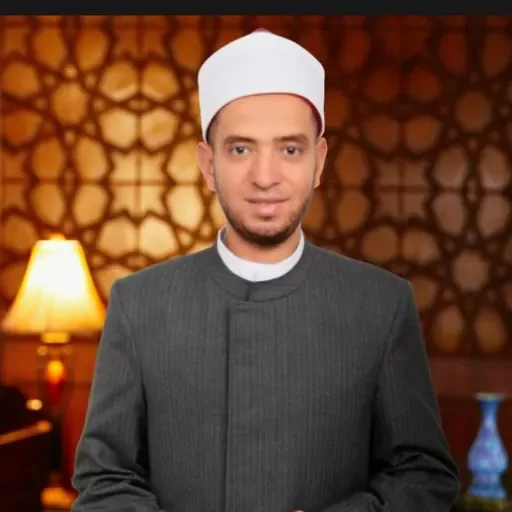 Teacher
Mahmoud Tantawy
- Faculty of Languages and Translation, Department of Islamic Studies
- Ijazah in Hafs ‘an ‘Asim via the Shatibiyyah
- Imam and Khatib at the Egyptian Ministry of Awqaf
Teaching style
Warmth with clear expectations
A good teacher knows how to make a child feel comfortable without losing the purpose of the lesson. Children should know when they have done well, when to try again and why a correction matters.
We look for an approach that is calm, encouraging and suitably structured for the learner’s age.
Choosing a match
A sensible fit matters
A confident reader and a shy beginner may need very different teaching styles. When considering a teacher, we pay attention to the learner’s level, the lesson language and the way the child responds.
If something is not working, we would rather discuss it early than let a child lose interest.
Keeping families informed
Teaching is a conversation with parents too
A short, specific update is worth more than a general promise of progress. Parents should be able to ask which skill needs attention and what a child can practise independently.
Individual lessons work best when the teacher, learner and family understand the immediate goal.