Skip to content

My Australian-Born Child Only Speaks English: How Can I Help Them Learn Arabic?
English-Speaking Child? Helping Arabic Grow

For Muslim families in Australia

My Australian-Born Child Only Speaks English: How Can I Help Them Learn Arabic?

An Australian-born child may know individual Arabic letters but struggle when their shapes change inside joined-up words.

Ustadha Jihad Fathy, teacher at Muslim Teachings AcademyBy Ustadha Jihad Fathy

Quick answer

If your Australian-born child knows Arabic letters but struggles with words, practise the letters’ connected forms and blend short vowel-marked words from right to left. Naming isolated letters and reading connected Arabic are different skills; teach them in small steps.

Why this matters for Muslim families in Australia

A child can know the names of individual Arabic letters yet struggle to read them inside connected words. Arabic shapes change depending on their position, and reading requires blending sounds rather than naming symbols one by one. For an English-speaking child in Australia, that is a specific learning step to practise, not evidence that Arabic is out of reach.

English-Speaking Child? Helping Arabic Grow
Image: Pexels, downloaded for this article
Ustadha Jihad Fathy

FROM OUR TEACHERS

He knew the letters until they appeared inside a word

Ustadha Jihad Fathy

During an Arabic lesson, a boy confidently named letters from a set of cards. When I opened a short line of connected Arabic writing, he paused at almost every word. He had learned the letters as separate pictures, but the shapes looked unfamiliar once they were joined.

We went back to three letters he knew well and traced how each looked at the beginning, middle and end of a word. I used a few short words with clear vowel marks and asked him to read the sounds together, not just recite the names of the letters. I avoided giving him a whole new alphabet sheet; that would have hidden the exact difficulty.

It reminded me how misleading a quick letter-name test can be. A child may have worked hard and still need explicit practice moving from isolated shapes to reading connected words.

What the difficulty with joined letters reveals

Look at connected letter forms

The same Arabic letter can look different at the beginning, middle or end of a written word.

Track Arabic from right to left

Show how letters connect, including letters that do not connect to the following one.

Blend sounds, not only letter names

Combine consonants and vowel marks to read short unfamiliar words rather than relying on rote memory.

A practical checklist for parents

  1. Check which isolated Arabic letters your child can already recognise.
  2. Compare each familiar letter in its isolated, initial, medial and final forms.
  3. Practise reading a short new word from right to left using the correct vowel marks.
  4. Use a few simple letter cards to build and read connected Arabic words.
  5. Watch for independent recognition of connected letter shapes, without demanding speed.

Instead of / Try

Instead of Try
Starting the alphabet again when words are difficult Check whether familiar letters are recognised in connected forms.
Practising only the names of separate letters Blend vowel-marked sounds into short unfamiliar words.
Correcting every pronunciation at once Choose one reading target and give feedback after an attempt.

A simple Arabic reading activity

Choose one Arabic letter your child already knows. Show it at the beginning, middle and end of three short, correctly written words with clear vowel marks. Ask them to find the letter first, then slowly blend each word from right to left. Stop after a few minutes and note which form needs more practice; avoid treating the task as a test.

Ustadha Jihad Fathy, teacher at Muslim Teachings Academy

Written by

Ustadha Jihad Fathy
Teacher at Muslim Teachings Academy

Also read: A 6-Week Quran and Arabic Learning Plan for Australian Summer

Thoughtful learning for your child

Explore Quran, Arabic and Islamic studies with our teaching team.

Book a Free Trial

Photo: Pexels. Teacher portrait, where shown: Muslim Teachings Academy.

← Back to the blog

My Child Was Born in Britain and Only Speaks English: How Can I Teach Them Arabic?

Quiet British street with traditional terraced houses

For Muslim families in Britain

My Child Was Born in Britain and Only Speaks English: How Can I Teach Them Arabic?

Ustadha Sondos Hassan, Arabic teacher at Muslim Teachings AcademyBy Ustadha Sondos Hassan

Quick answer

To help a British-born child learn Arabic, start with phrases they genuinely want to use, such as greeting a grandparent. Practise short, relaxed conversations at home and build reading skills gradually. Avoid correcting every word at once; a willingness to speak matters more than an immediate perfect sentence.

Why your British-born child may understand English but not Arabic

If your child was born in Britain, English may be the language of nursery or school, friends, cartoons and everyday play. Even in a Muslim family, Arabic can be something they hear occasionally rather than a language they need to use.

That can feel especially painful when grandparents and relatives live abroad. A weekly video call becomes a conversation your child wants to join, but cannot yet follow.

Starting Arabic does not mean abandoning English or expecting a child to speak perfectly overnight. It means creating small, welcoming opportunities to understand and use meaningful words.

Laptop and notebook at home, representing family video calls and online Arabic lessons
Photo: Inga Seliverstova / Pexels
Ustadha Sondos Hassan

FROM OUR TEACHERS

She wanted to speak to Teta, not pass another vocabulary test

Ustadha Sondos Hassan

A young girl told me she became quiet during video calls with her grandmother in Egypt. Her mum would translate, and the girl would smile at the screen without knowing what to say. The family had been practising Arabic words, but the lists didn’t include the things she actually wanted to tell Teta.

I asked what she would like to say on their next call. We chose a greeting, a way to ask how her grandmother was and one short sentence about her day. We said them aloud in little exchanges, sometimes with me playing the grandmother. Her English was never treated as something she had to stop using.

The purpose was modest: help Arabic become useful in a warm family conversation. I would not call a child fluent after learning a few phrases, but I would value the confidence to try one.

What this story teaches us

01

Start with a real reason to speak

The girl wanted to connect with her grandmother, not pass a vocabulary test. A meaningful purpose made her keen to try.

02

One phrase used is progress

Using “How are you, Teta?” in a real conversation mattered more than repeating a long list in a lesson.

03

Home practice should feel natural

A few gentle minutes during meals or bedtime can reinforce lessons without turning family life into a classroom.

A gentle first-week plan for Arabic at home

You do not need to teach a whole alphabet or insist on Arabic-only conversations. Start with what your child would genuinely like to say to someone they love.

  1. Choose a person or purpose. Your child’s Teta, Grandad, auntie, or cousin is a great place to start.
  2. Pick one useful sentence. Try «أنا بحبك يا تيتا» (I love you, Teta), if that suits your family.
  3. Practise in tiny parts. Say one word, let your child echo it, and build the phrase gently.
  4. Use the words at home. Five or ten minutes at meals or bedtime is enough for a comfortable practice moment.
  5. Bring it into a real conversation. Your child might say their new phrase during the next family video call.

Repeat the plan with different phrases as your child becomes comfortable. Some children will take longer than others, and that is fine.

Open Arabic-language book showing printed Arabic letters
Photo: Roya Alyan / Pexels

Instead of correcting every word, try this

How adults respond can make Arabic feel like a friendly part of family life rather than another school subject.

Instead of: “Say everything in Arabic from now on.”

Try: “Let’s use one little Arabic phrase at breakfast, and one before bed.”

Instead of: “You learnt twenty words. Repeat them all.”

Try: “Which new word could you use to tell Teta something you love?”

Instead of: “No, that’s wrong. Try again.”

Try: Repeat the phrase naturally in Arabic, then gently let the conversation carry on.

Instead of: “Your cousins speak Arabic much better.”

Try: “You spoke Arabic to Teta because you wanted to. That’s a lovely step forward.”

Three Arabic games that fit family life in Britain

  • Words for Teta: Make a small collection of phrases your child chooses for the next call. Stick to a couple of phrases at a time.
  • What’s for tea? At mealtime, show two foods and practise «أنا بحب المكرونة» (I like pasta) or another phrase about what your child likes.
  • You be the teacher: Swap roles and let your child teach you a word they learnt. They can correct you, laugh, and try again.

If you use Egyptian Arabic with family, you can begin with familiar home expressions. Later, your child can gradually learn standard Arabic reading and writing alongside their speaking practice.

Should we teach spoken Arabic or the alphabet first?

It does not have to be a strict choice. For a young beginner who knows almost no Arabic, useful spoken phrases can offer a reason to keep learning. At the same time, the teacher can introduce letters and sounds gradually and connect them with words the child already recognises.

Speaking, understanding, reading and writing develop at different rates. A child may be ready to use a short greeting with Grandma long before they can read the same words on a page.

Over time, learning the Arabic alphabet can support Quran reading. Understanding Quranic Arabic requires additional, age-appropriate teaching, so it helps to treat everyday conversation and Quran study as connected but distinct goals.

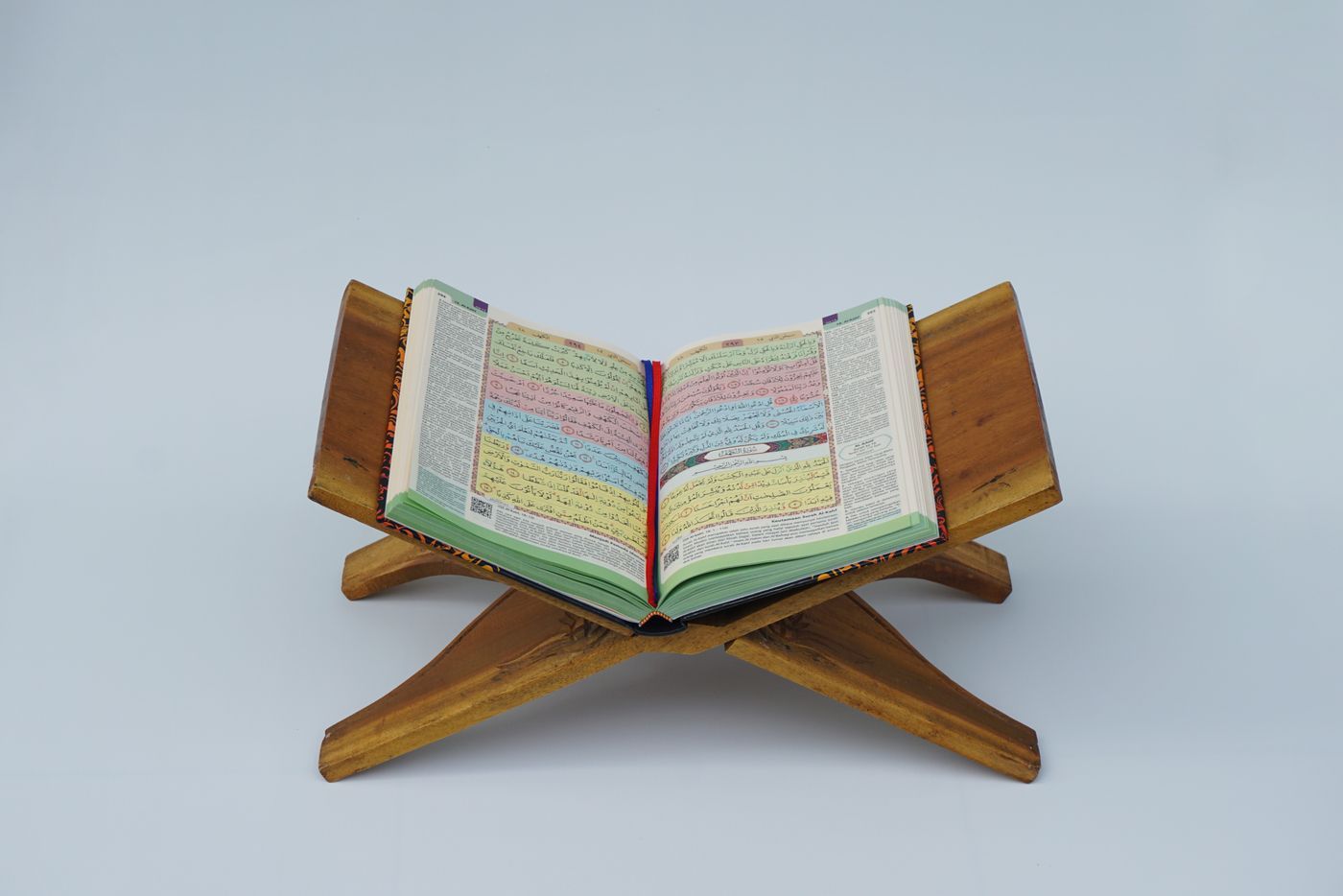
Open Quran resting on a wooden stand
Photo: MATAQ Darul Ulum / Pexels

What progress can look like

  • Your child recognises one familiar Arabic greeting.
  • They try a word in a real conversation, even if the rest is in English.
  • They ask what Grandma said instead of giving up on the conversation.
  • They begin connecting familiar spoken words with Arabic letters.
  • They choose to use an Arabic phrase without prompting.

Those steps matter more than making every sentence flawless. Please do not compare a child who lives in Britain with one who hears Arabic in every part of life in an Arabic-speaking country.

Let Arabic become part of their life, not just their lessons

A child should not have to feel guilty about being more comfortable in English. The aim is to build another language alongside it — a language that can help them talk to family, connect with their roots, and grow familiar with the language of the Quran.

For the girl in Ustadha Sondos’s story, the big breakthrough was not a test score or twenty words learnt in a lesson. It was choosing to greet her Teta in Arabic.

One word used with love can be the beginning of a lifelong relationship with Arabic.

Also read: My Child Understands Arabic but Always Answers in English: What Can I Do?

Image sources (Pexels, free to use): British homes (Mikhail Lazarenko); home learning desk (Inga Seliverstova); Arabic book (Roya Alyan); Quran on a stand (MATAQ Darul Ulum).

← Back to the blog

My Child Understands Arabic but Always Answers in English: What Can I Do?

My child understands Arabic but always answers in English: gentle, playful ways to help your child speak Arabic at home

For Muslim families in America

My Child Understands Arabic but Always Answers in English: What Can I Do?

If your child follows every word you say in Arabic but replies in English, you are not alone. It is one of the most common things we hear from Muslim parents in the US, and it can change with patience and play.

Ustadha Jihad Fathy, academy teaching-team member
By Ustadha Jihad Fathy

Quick answer

If your child understands Arabic but replies in English, treat comprehension as a strength and practise speaking without pressure. Begin with one familiar word, expand it into a short sentence and use natural exchanges at home. Asking for perfect Arabic every time can make a hesitant child quieter.

Why so many Muslim kids in America do this

You ask a question in Arabic. Your child clearly understands it, and answers straight away… in English. You ask them to say it in Arabic, and they shrug: “I don’t know how to say it!”

This is very normal for children growing up in the United States. English is the language of school, friends, cartoons and play. It is the language they use for most of their day, so it comes out first and fastest.

Understanding a language and speaking it are two different skills. Most children can understand far more than they can say, especially when they hear Arabic at home but rarely need to use it themselves. So when your child answers in English, it usually does not mean they are rejecting Arabic. It often means they have never had enough calm, low-pressure practice putting their own thoughts into Arabic words.

Arabic calligraphy decorating the ceiling of a historic building
Ustadha Jihad Fathy

FROM OUR TEACHERS

She understood the question but answered in English

Ustadha Jihad Fathy

During a lesson, I asked a little girl in Arabic what she had done after school. She understood straight away and replied in English. When I asked for the same answer in Arabic, she grew quiet and said she knew the words but couldn’t make them come out quickly enough.

I stopped asking for a complete sentence. We chose one familiar action, practised a two-word response, then built it into a short exchange. I let her think without filling every silence and kept English available when she needed to explain something. Her comprehension was a strength we could build on, not proof that she was refusing Arabic.

For children growing up in the United States, understanding family Arabic and speaking it confidently are different steps. I wanted the lesson to make speaking feel possible rather than risky.

What this story teaches us

01

Understanding is a real foundation

A child’s understanding of familiar Arabic is a valuable foundation, even when speaking still needs practice. Speaking is the next step, not a fresh start.

02

Pressure leads to silence

“Say it in Arabic!” often ends in “I don’t know.” Children speak more when the stakes feel low.

03

Small steps add up

One word, then a short sentence, then a question of their own. Every step deserves a smile.

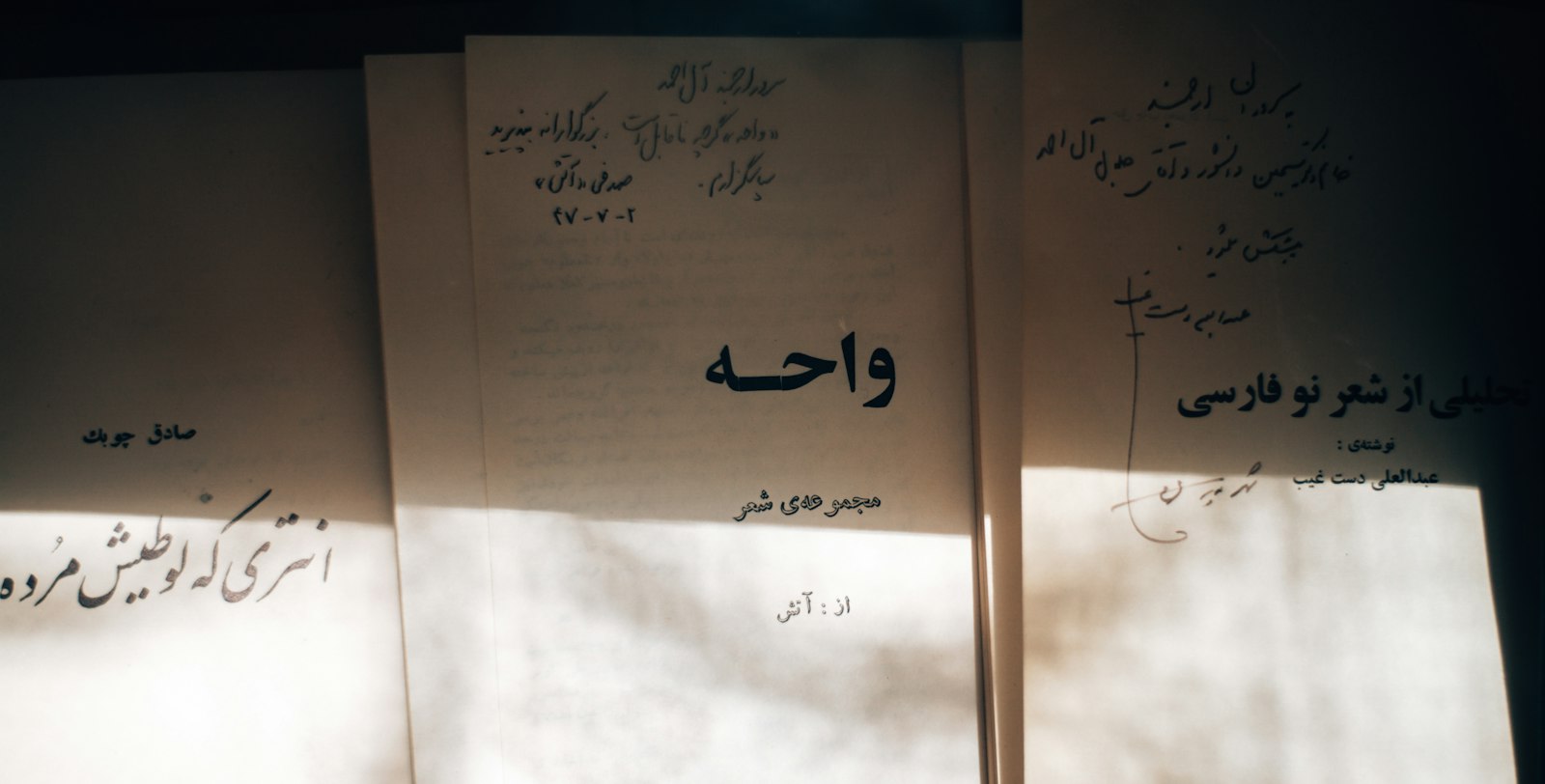
Old books with handwritten Arabic script in warm sunlight

Five minutes a day: a simple plan for home

You don’t need a curriculum or a whiteboard. You need a few relaxed minutes, every day, linked to something your child already enjoys.

  1. Pick one daily moment. Snack time, choosing dinner, getting dressed or a bedtime story all work well.
  2. Speak Arabic naturally during it. Keep your sentences short and clear, and point to real things.
  3. Offer choices instead of open questions. “Apples or bananas?” is much easier to answer in Arabic than “What do you want?”
  4. If they answer in English, say it back in Arabic. No correction, no “try again”. Just repeat the meaning in Arabic with a smile, and carry on.
  5. Celebrate any Arabic at all. A single word is a win. Praise the effort, not the grammar.

What to say instead

Small changes in how we respond can make Arabic feel safe instead of stressful.

Instead of: “Speak Arabic!”

Try: “Oh, you had pasta! أكلتي مكرونة؟ Yummy!”

Instead of: “That’s wrong, say it properly.”

Try: repeating the sentence correctly yourself, warmly, and moving on.

Instead of: “Answer in a full sentence.”

Try: offering two choices, then modelling the full sentence: “I like apples. And you?”

Instead of: “Your cousins speak Arabic better than you.”

Try: “I love hearing you speak Arabic. Teach me a word you learned today!”

Games that get kids talking

  • Pick one: show two pictures or two real objects and ask which one they like. It is the same game that worked in Ustadha Jihad’s lesson.
  • Teacher and student: you play the teacher, then swap. Children love being the one who asks the questions.
  • Finish the story: at bedtime, pause before a familiar word and let your child fill it in, in Arabic.
  • Arabic menu: once a week, your child “orders” their snack in Arabic from you, the waiter.

Keep each game short and stop while it is still fun. The aim is for your child to want to play again tomorrow.

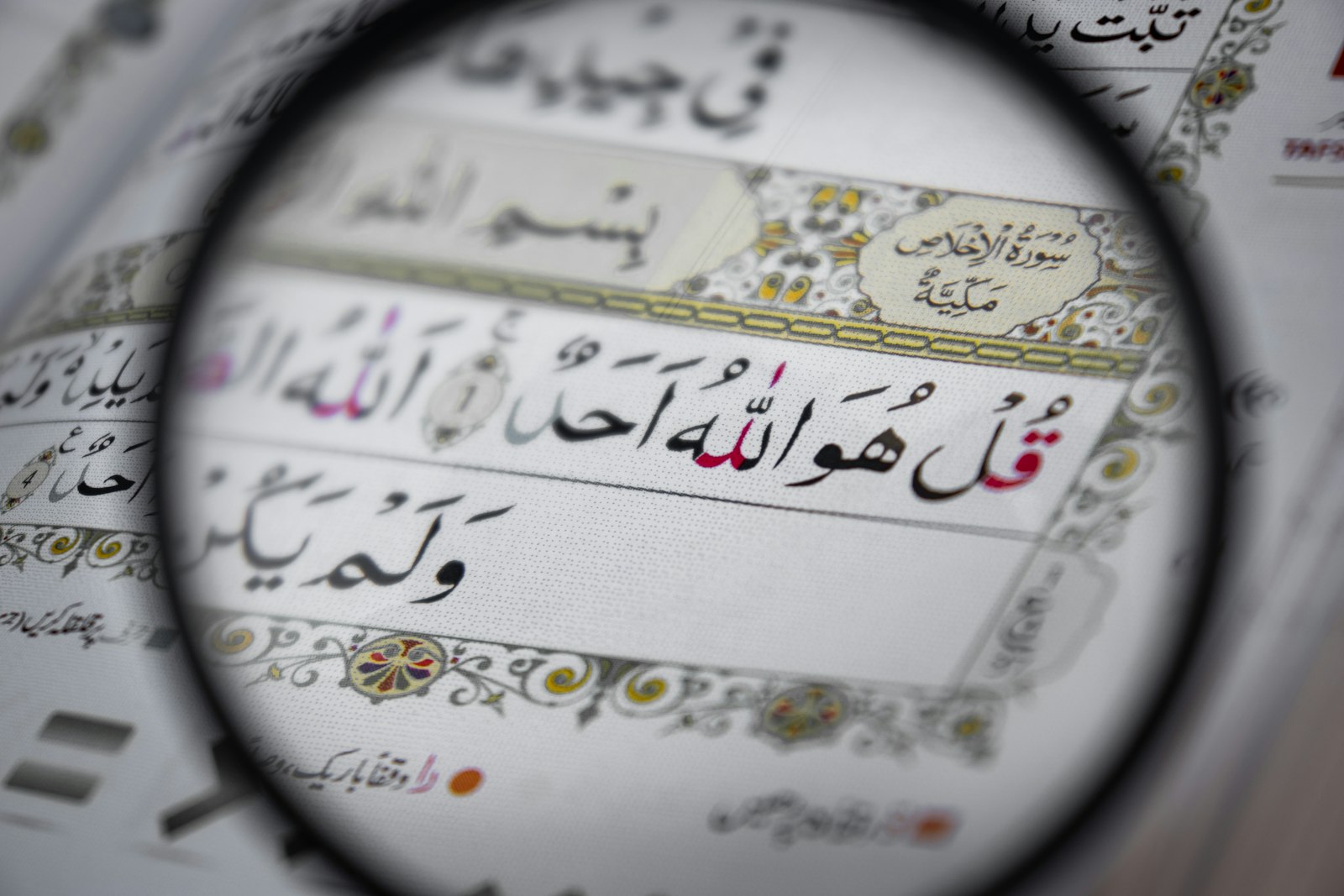
Arabic text seen through a round magnifying glass

What progress really looks like

Progress is usually gradual. Many children move through stages like these:

  • Answering in English while clearly understanding Arabic.
  • Using single Arabic words, especially when given a choice.
  • Repeating short sentences after you.
  • Making short sentences of their own.
  • Asking questions in Arabic without being prompted.

Every child moves at their own pace. What matters is the direction, and the feeling your child has about Arabic along the way.

Make Arabic a language your child loves

When Arabic is linked to stories, laughter and time with family, children want to use it. When it is linked mostly to instructions and corrections, they avoid it.

Arabic is also the language of the Qur’an, and a child who feels at home in it is better prepared to understand what they recite in prayer. That journey starts with small, happy conversations at home, long before it reaches the classroom.

Also read: “Why Don’t You Eat Like Us?” How to Raise Confident Muslim Kids in American Schools

Photos: Unsplash.

← Back to the blog