



For Muslim families in Britain
My Child Was Born in Britain and Only Speaks English: How Can I Teach Them Arabic?
 By Ustadha Sondos Hassan
Quick answer
To help a British-born child learn Arabic, start with phrases they genuinely want to use, such as greeting a grandparent. Practise short, relaxed conversations at home and build reading skills gradually. Avoid correcting every word at once; a willingness to speak matters more than an immediate perfect sentence.
Why your British-born child may understand English but not Arabic
If your child was born in Britain, English may be the language of nursery or school, friends, cartoons and everyday play. Even in a Muslim family, Arabic can be something they hear occasionally rather than a language they need to use.
That can feel especially painful when grandparents and relatives live abroad. A weekly video call becomes a conversation your child wants to join, but cannot yet follow.
Starting Arabic does not mean abandoning English or expecting a child to speak perfectly overnight. It means creating small, welcoming opportunities to understand and use meaningful words.
FROM OUR TEACHERS
She wanted to speak to Teta, not pass another vocabulary test
Ustadha Sondos Hassan
A young girl told me she became quiet during video calls with her grandmother in Egypt. Her mum would translate, and the girl would smile at the screen without knowing what to say. The family had been practising Arabic words, but the lists didn’t include the things she actually wanted to tell Teta.
I asked what she would like to say on their next call. We chose a greeting, a way to ask how her grandmother was and one short sentence about her day. We said them aloud in little exchanges, sometimes with me playing the grandmother. Her English was never treated as something she had to stop using.
The purpose was modest: help Arabic become useful in a warm family conversation. I would not call a child fluent after learning a few phrases, but I would value the confidence to try one.
What this story teaches us
01
Start with a real reason to speak
The girl wanted to connect with her grandmother, not pass a vocabulary test. A meaningful purpose made her keen to try.
02
One phrase used is progress
Using “How are you, Teta?” in a real conversation mattered more than repeating a long list in a lesson.
03
Home practice should feel natural
A few gentle minutes during meals or bedtime can reinforce lessons without turning family life into a classroom.
A gentle first-week plan for Arabic at home
You do not need to teach a whole alphabet or insist on Arabic-only conversations. Start with what your child would genuinely like to say to someone they love.
- Choose a person or purpose. Your child’s Teta, Grandad, auntie, or cousin is a great place to start.
- Pick one useful sentence. Try «أنا بحبك يا تيتا» (I love you, Teta), if that suits your family.
- Practise in tiny parts. Say one word, let your child echo it, and build the phrase gently.
- Use the words at home. Five or ten minutes at meals or bedtime is enough for a comfortable practice moment.
- Bring it into a real conversation. Your child might say their new phrase during the next family video call.
Repeat the plan with different phrases as your child becomes comfortable. Some children will take longer than others, and that is fine.
Instead of correcting every word, try this
How adults respond can make Arabic feel like a friendly part of family life rather than another school subject.
Instead of: “Say everything in Arabic from now on.”
Try: “Let’s use one little Arabic phrase at breakfast, and one before bed.”
Instead of: “You learnt twenty words. Repeat them all.”
Try: “Which new word could you use to tell Teta something you love?”
Instead of: “No, that’s wrong. Try again.”
Try: Repeat the phrase naturally in Arabic, then gently let the conversation carry on.
Instead of: “Your cousins speak Arabic much better.”
Try: “You spoke Arabic to Teta because you wanted to. That’s a lovely step forward.”
Three Arabic games that fit family life in Britain
- Words for Teta: Make a small collection of phrases your child chooses for the next call. Stick to a couple of phrases at a time.
- What’s for tea? At mealtime, show two foods and practise «أنا بحب المكرونة» (I like pasta) or another phrase about what your child likes.
- You be the teacher: Swap roles and let your child teach you a word they learnt. They can correct you, laugh, and try again.
If you use Egyptian Arabic with family, you can begin with familiar home expressions. Later, your child can gradually learn standard Arabic reading and writing alongside their speaking practice.
Should we teach spoken Arabic or the alphabet first?
It does not have to be a strict choice. For a young beginner who knows almost no Arabic, useful spoken phrases can offer a reason to keep learning. At the same time, the teacher can introduce letters and sounds gradually and connect them with words the child already recognises.
Speaking, understanding, reading and writing develop at different rates. A child may be ready to use a short greeting with Grandma long before they can read the same words on a page.
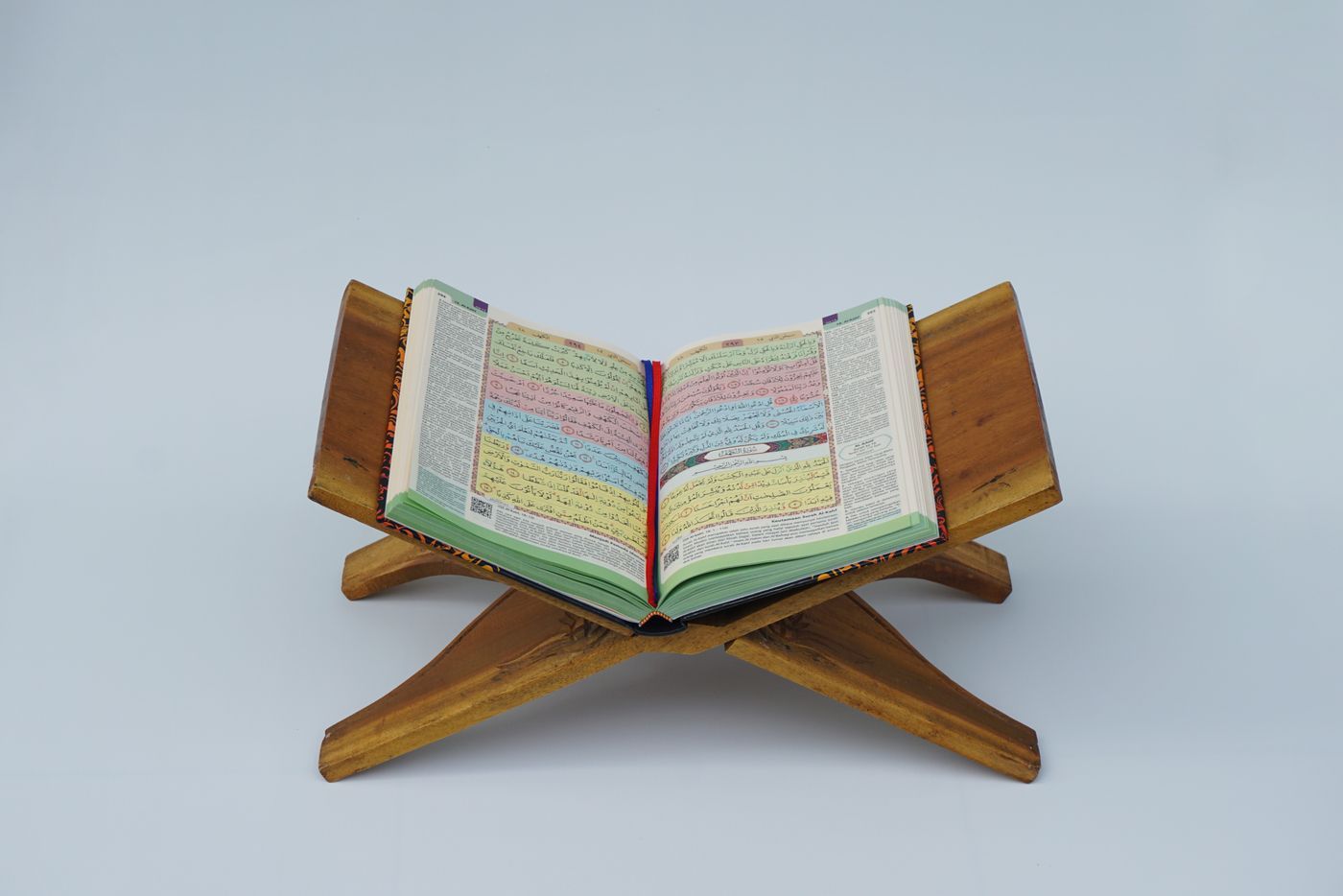
Over time, learning the Arabic alphabet can support Quran reading. Understanding Quranic Arabic requires additional, age-appropriate teaching, so it helps to treat everyday conversation and Quran study as connected but distinct goals.
What progress can look like
- Your child recognises one familiar Arabic greeting.
- They try a word in a real conversation, even if the rest is in English.
- They ask what Grandma said instead of giving up on the conversation.
- They begin connecting familiar spoken words with Arabic letters.
- They choose to use an Arabic phrase without prompting.
Those steps matter more than making every sentence flawless. Please do not compare a child who lives in Britain with one who hears Arabic in every part of life in an Arabic-speaking country.
Let Arabic become part of their life, not just their lessons
A child should not have to feel guilty about being more comfortable in English. The aim is to build another language alongside it — a language that can help them talk to family, connect with their roots, and grow familiar with the language of the Quran.
For the girl in Ustadha Sondos’s story, the big breakthrough was not a test score or twenty words learnt in a lesson. It was choosing to greet her Teta in Arabic.
One word used with love can be the beginning of a lifelong relationship with Arabic.
Image sources (Pexels, free to use): British homes (Mikhail Lazarenko); home learning desk (Inga Seliverstova); Arabic book (Roya Alyan); Quran on a stand (MATAQ Darul Ulum).